Sunday, October 31, 2021
When You Need To Replace Your Windscreen?
What to Do When Your Windshield Cracks on the Road
When your windshield cracks on the road, you need to make sure you take the time to fix it right away or else you could end up with further damage or even endanger yourself and others on the road. Considering professional windshield repair Sydney as soon as possible is essential no matter how small, or big the damage is. Here are some steps on what to do when your windshield cracks on the road.
Steps To Follow When Your Windshield Cracks On the Road
Step 1: Assess The Damage
Cracks in your windshield aren’t just annoying—they also compromise your safety and security while you’re driving. But don’t panic! It’s easy to assess whether or not you should continue driving or get repairs made. The National Safety Council recommends that if a crack is longer than six inches, you should repair it at once. Smaller cracks can be covered by a small amount of clear tape and pushed over to form a temporary seal. If you have to pull over for any reason—if traffic gets too heavy or an emergency arises—find a safe spot and park immediately.
Step 2: Call A Mobile Service To Come Fix Your Crack
When your windshield gets a crack, you don’t want to wait—you must get it fixed as soon as possible. Windscreen expert says more than 50% of accidents caused by cracked windshields could have been prevented if they had been repaired in time. Luckily, there is an easy way around waiting for an appointment at a repair shop: call a mobile service, and they will come fix it for you wherever you are. The technicians come with all needed tools and materials, will fix a cracked windshield is quick and convenient! Make sure to hire the windscreen replacement and repair company that specialises in car glass repair Sydney and fix the issues in speed.
Step 3: Keep Driving
Just keep driving after the issues are fixed by the professionals. Yes, the mobile glass technician will solve most windscreen replacement and windscreen crack repair Sydney issues on the spot. Their mobile vans are always stocked with replacement screens and auto glass that suit most of the vehicles. So, once the issue is fixed, you can keep moving and enjoy the ride as usual without any worries.
The Bottom Line
A cracked windshield on the road can ruin your trip, so it’s important to know how to handle this type of emergency situation. Follow the above steps and back the more for the trip again on the same day.
Tuesday, October 26, 2021
When Should You Get Your Windscreen Repair or Replacement?
Wednesday, September 29, 2021
Why Tires of Your Acura Car are So Important
Tires are inarguably one of the essential safety features of any vehicle. Besides the engine, good-quality tires can allow your car to perform better. Granted, buying new tires and putting them on rims isn’t the most pleasant experience, but tire performance is vital for your Acura car. If you want to know why it matters, here are the primary reasons from an expert Acura auto mechanic in San Antonio, TX.
Safety
The number one reason why tires are important is safety. If you have driven your car for thousands of miles, chances are one or more tires must have worn down. And if you keep going with worn-out tires, you are putting yourself and other passengers at risk. Each tire supports the weight of your vehicle, and that’s a pretty big deal. Good tires will help you maintain grip on the road and take turns or stop the car more safely.
Performance of Your Car
When tires are in good condition (and are filled with the required pressure), you will notice an improvement while driving. Your car drives a lot smoother, and you will have better control of your vehicle. On the flip side, you might see the car vibrating a lot when you use worn tires. Traveling becomes less comfortable, and vehicle performance will significantly deteriorate. When your car tires are in poor condition, they can interfere with the suspension and adversely impact your driving. An Acura auto mechanic in San Antonio, TX recommends investing in high-quality tires and changing them when necessary.
Fuel Efficiency
The condition of your tires determines how much you will be spending on fuel. Old or damaged tires can prevent your vehicle from moving smoothly, which leads to increased fuel consumption and expenses. So, check the tires if you feel they are off for some reason. When you don’t prioritize changing the tires, you will pay more for fuel down the road.
Maintaining Your Tires:
Now that you know how essential tires are, you should take the necessary steps towards maintaining each one. Here are a few tips you should remember:
- Check the tire pressure every month.
- Inspect the tires for wear and tear, blemishes, or cracks. Get in touch with an Acura repair shop in San Antonio, TX, if you need any assistance in this regard.
- If you feel like your car is shaky on the road, it is an ideal time to inspect the tires with the help of a professional.
Identifying problems associated with your tires and fixing them early on can prevent other issues in the future. So, spend some time looking into the condition of your Acura car’s tires and see what must be done to extend their longevity. Get in touch with an Acura repair shop near me, if you have any questions on tire replacement or maintenance.
Wednesday, September 1, 2021
The Future Looks Bright for EV Adoption in Australia

The global adoption of electric vehicles (EV) has been growing steadily in recent years. The rate is much slower in Australia, but things are starting to pick up thanks to some significant developments. At first, Australians have many valid reasons to be reluctant to let go of their conventional gas vehicles. These include concerns regarding the lack of infrastructure as well as the lack of more affordable EV choices.
Luckily, things are starting to change. With the arrival of more affordable EV options and more EV chargers, the adoption of EV in Australia is looking very bright. At the forefront of these crucial developments is Tesla, which has successfully addressed the EV’s ability to bring people to their destinations without running out of charge.
Tesla’s extensive network of charging stations
In addition to the long-range batteries found in newer Tesla models, Tesla has also launched an extensive network of charging stations throughout Australia. These are usually found in well-travelled routes and other convenient locations so that EV owners can easily stay charged wherever they go.
To enable wider adoption, many EV companies are starting to develop the charging infrastructure. Now anyone can easily have a Tesla charger installed for a greener, cleaner and more sustainable future.
Installing a Tesla car charger in Sydney
In recent years, more and more Aussies are starting to switch to EVs. Aside from saving the environment, this shift can also help them save in the long run. For more convenience, they can also have a Tesla car charger installed at home for faster-charging speeds.
Faster charging through a dedicated power circuit
If you are aiming for the fastest charging, you may want to move away from standard charging cables. Using a standard PowerPoint at your home or garage will also use the power source running your other home electronics and devices. This would mean reduced charging times for your EV and power supply disruption to your home.
To avoid these potential issues, it is best to have a dedicated power circuit for your car when installing a Tesla wall charger. Using a single output with concentrated electricity, you can achieve the quickest charging times for your EV without causing electrical disruptions to the rest of your home.
Final Word
It may take two or more days before the Tesla charger you have had installed at your home to be fully operational. This will greatly depend on how complex your electrical system is at home. However, installing the actual charger itself will only take about an hour or more. If you can get a dedicated EV charging station at home, you can be sure of much faster-charging speeds. Based on studies, you can reach full capacity just by charging overnight. Come morning time, you will be set and ready for a nice and comfy ride.
Saturday, August 28, 2021
Will AGL’s Torrens Island Grid Scale Batteries Spell the End of Vehicle to Grid technology in Australia?

AGL has announced it will begin construction a 250-megawatt (MW) grid-scale battery at Torrens Island, providing Australia it’s second major battery storage option. But could further battery deployments such as this spell the end of V2G in Australia before it even gets started?
Unlike many other forms of energy storage and generation, batteries are particularly valuable because they provide flexibility. They can respond faster than other energy storage or generation technologies, and help maintain grid stability by turning on and off in fractions of a second.
V2G is an exciting concept where electric vehicles can connect to the electricity grid to provide ancillary services, such as frequency regulation, peak shaving & green energy storage via revenue sharing. In essence, it’s the UBER or Airbnb of EV’s – the aggregation of many parts to create a huge battery on wheels without owning the batteries.
V2G is compelling, especially in regions where traditional forms of storage, back-up or peak supply are unavailable or expensive. V2G has always had its believers and sceptics. Personally, I’ve sat on the fence evaluating the economic viability of vehicle-to-grid operations globally and have now shifted to being more sceptical as grid scale batteries effectively reduce the cost of peak electricity by utilising excess green energy.
Is V2G commercially right now?
The short answer is no. I recognise the potential of V2G but EV owners cannot just “turn on” V2G capabilities in their vehicles and expect commercial transactions to start generating a return.
In fact, we need a whole regulatory framework built before we even get close. V2G needs to be supported by policies that regulates electricity markets.
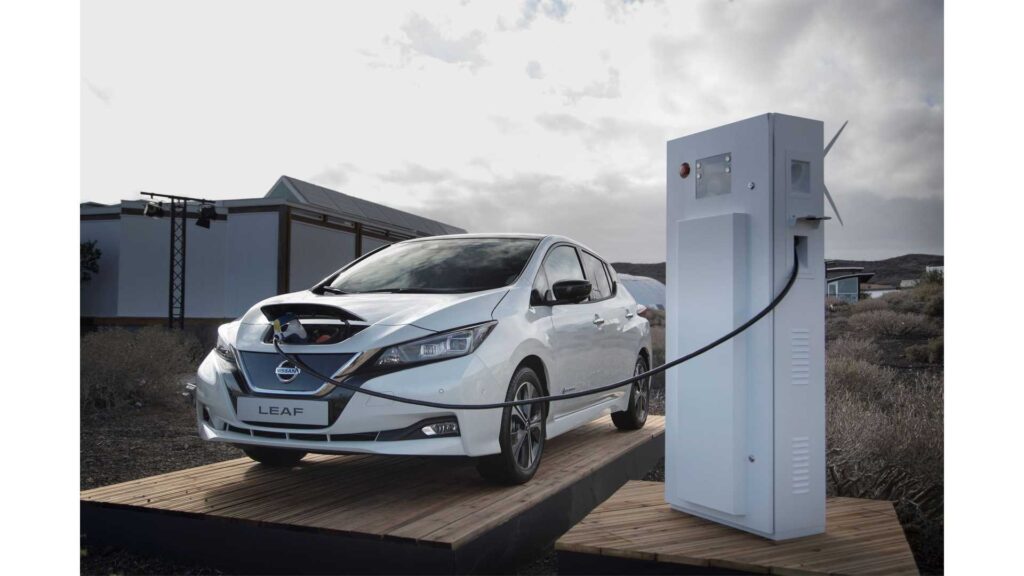
The challenges to the commercialisation of V2G are:
- Battery Degradation – Extra cycles means a shorter battery life.
- Electricity loss through V2G – Yes the unknown, but you can lose up to 20-30% of electricity as it goes in and then out of the EV. In my opinion the biggest challenge we have is to re-imburse EV drivers. When we are losing an excessive amount of electricity, the economics become unviable.
- Excessive cost of V2G units – 10x a standard AC charging station means the payback time may never be realised.
- The uncertain nature of EV drivers – may make the orchestration challenging to provide any certainty to grid operators. An EV needs to be plugged in and available in terms of capacity to provide the required electricity.
- Regulatory framework – the ability to provide standardisation of regulations to meet both local and global standards.
What have the studies shown?
The results have been mixed with some positive data from trials in Europe offset by other trials showing low returns and high infrastructure costs. For example, in 2017 a year-long trial in Denmark employing V2G allowed the fleet owner to generate revenue from the utilities. A fleet of 10 Nissan e-NV200 vans earned $2,600 AUD over the course of a year. However, this also came with a significant increase in the cost of infrastructure and equated to a profit of only $260 per van per year without taking into consideration the costs of the deployment. This means that V2G only marginally offset the extra V2G infrastructure charging costs. For fleet owners, minimizing operational costs requires a combination of pre-planning with utility involvement, charging and energy management, along with technology like V2G.
What happens when grid scale batteries reduce the electricity price spikes? The return on the investment is further squeezed and the economics of V2G become less viable.

The battery arms race
The auto industry has launched an innovation arms race to build smaller, cheaper, and more powerful lithium-ion batteries for electric cars. The consequence – falling prices and technological progress that allows batteries to store ever-larger amounts of energy. As a result, grid-scale systems are seeing record growth globally and in Australia.
Grid scale batteries overcome one of the biggest obstacles to renewable energy — its cycling between oversupply when the sun shines or the wind blows, and shortage when the sun sets or the wind drops. By smoothing imbalances between supply and demand, proponents say, batteries can replace fossil fuel “peaker” plants that kick in for a few hours a day when energy demands soar. Experts say that widespread energy storage is key to expanding the reach of renewables and speeding the transition to a carbon-free power grid.
If V2G is still not viable what is?
We know that plug and play electric car chargers for large scale rollouts do not work. We know that long term having millions of EV’s plugging in at 5pm will cause additional stress on the grid and we have already seen examples of this globally. A Denver Electric bus operator found that they were paying “nearly 60% more to operate their electric buses compared to their diesel coaches”. Sounds impossible, but their peak demand bills from their utility reduced the economics of their roll-out. Internal investigations showed a demand response managed system was a smarter way to for this electric bus operators to energise their fleet – this would reduce costs by 80%.
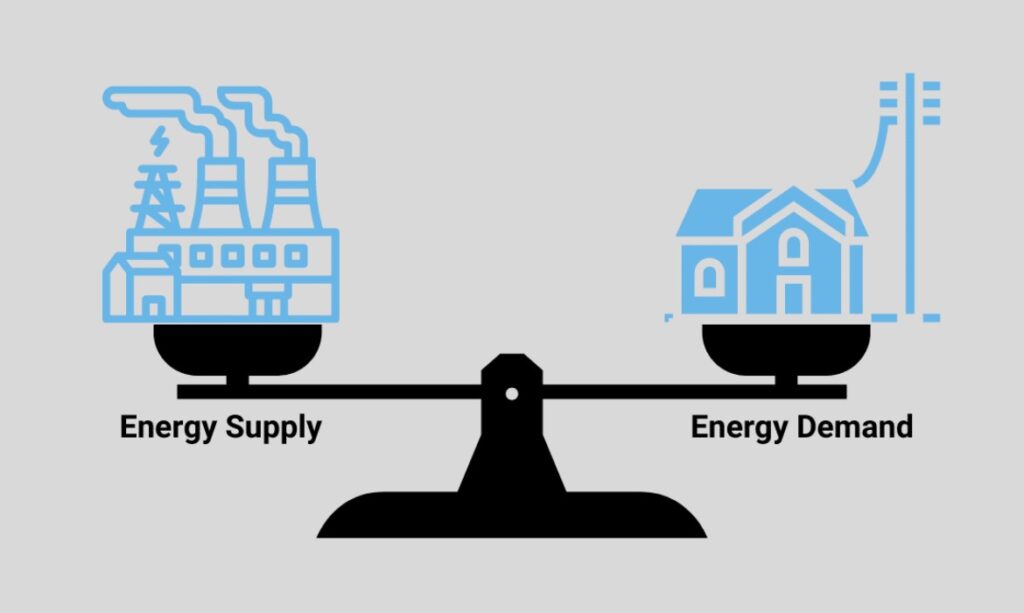
Demand side response
The ability to be paid for patience in short. Demand side response has many advantages and does not carry some of the risk of V2G. These include:
- Cost – An OCPP EV charging station is already cost effective and available for a small premium on a basic AC Charger
- An aggregation software can link chargers together across a local, state and national fleet to provide instantaneous variation in power. Ie Exploren OCPP Virtual Power Plant
- Importantly we avoid the loss of electricity in the V2G process
- Easier regulatory framework
Analysis conducted by the team at EVSE Australia shows that an EV fleet owner can already look to save 30-60% of energy costs by using managed charging and machine learning via smart charging software, allowing a fleet operator to charge EVs when the rates are cheaper. This means that V2G alone is not enough to offset EV charging costs, particularly for fleet owners. Minimizing operational costs requires a combination of pre-planning with utility involvement, energy management and understand a vehicles dwell & utilisation time. Demand side response can further improve that dynamic by allowing fleet and EV owners to be paid to reduce, stop or alter their charging session.
Whilst we think that V2G technology is exciting and something that we will continue to explore as this market evolves, we are also investing heavily into developing OCPP based Virtual Power Plant (VPP) capabilities in partnership with Exploren. The ultimate aim is to help our customers reduce the operational cost of owning an EV but also provide grid operators a powerful tool to help balance the costs of electricity to end users.
Seventy Percent or Bust
New York’s 2025 rule is brutally simple: any glass the driver looks through must transmit at least 70 percent visible light once factory and...
-
New York’s 2025 rule is brutally simple: any glass the driver looks through must transmit at least 70 percent visible light once factory and...
-
AGL has announced it will begin construction a 250-megawatt (MW) grid-scale battery at Torrens Island, providing Australia it’s second major...
-
According to the National Highway Traffic Safety Administration, brake failures account for about 22% of all vehicle accidents caused by veh...